

How Green Jobs Invest in Our Planet
Green jobs are essential to mitigating the effects of and building resilience to climate change — and they’re growing rapidly. In this article, we explore 4 ways that green jobs “invest” in our planet.

Closing the Skills Gap: The Transformative Role of Apprenticeships in Today’s Workforce
As of November 2023, the labor landscape continues to reveal a compelling yet challenging scenario. The Bureau of Labor Statistics underscores a national surplus of 10.7 million available jobs, a staggering contrast to the 6.1 million positions currently filled. This discrepancy, often attributed to the “skills gap,” amplifies the critical need for a skilled workforce aligned with evolving economic trends, particularly in fields related to climate solutions and advancing technologies.

Job Opportunities in Energy: Low-Energy, Low-Impact Buildings
Our built environment is a massive contributor to the climate crisis through its impacts on the atmosphere and broader ecosystems. In terms of energy, buildings consume about 40% of all electricity. This week, we are focusing on low-energy, low-impact building professionals.

Job Opportunities in Energy: HERS Rater
This week, we are focusing on the Home Energy Rating System (HERS) Professional, or HERS Rater. A HERS rater is a weatherization professional and works in the home performance industry. This field evaluates the safety, comfort, durability, and efficiency of a building by considering its structure as a system made up of interacting parts.
Job Opportunities in Energy: Wind Turbine Technician
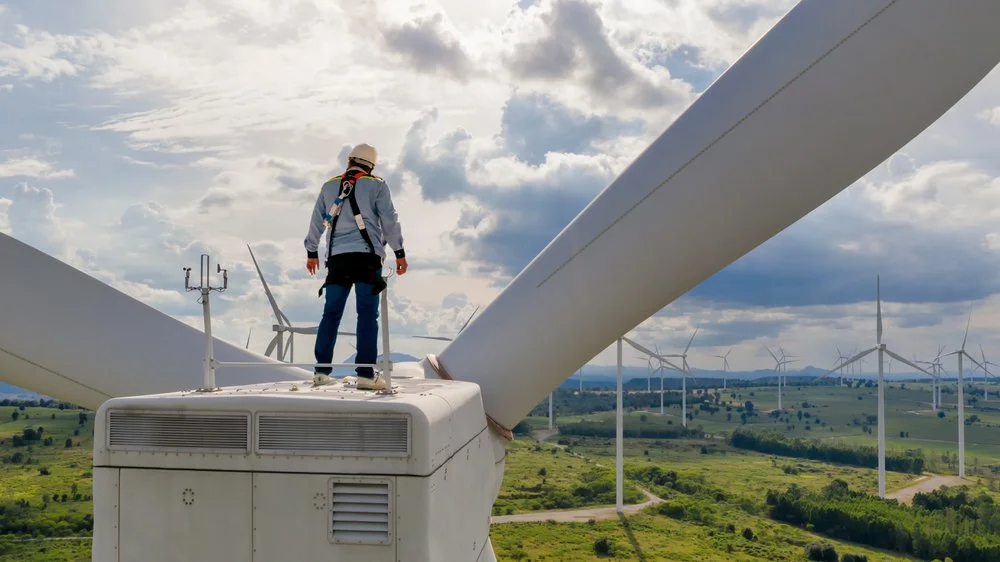
This week, we are focusing on another rapidly growing career opportunities in renewable energy — the wind turbine service technician, or wind tech. This position is the fastest growing occupation in the United States, in part because of its particular low barrier to entry compared to the other trades as there are no mandatory licensing requirements.

Job Opportunities in Energy: Solar Installer
In 2021, the solar energy sector employed nearly 334,000 workers. Of these jobs, over half were in the construction industry. 93% of employers in the construction sub-sector of solar reported difficulty hiring employees, many citing a labor shortage — meaning there is ample opportunity for those interested in entering the industry.

Energy Efficiency Policies in Connecticut
The United States is making efforts to tackle climate change by taking legislative actions, both on the federal and state level. Earth Forward Group has strong roots in Connecticut, where state policies are encouraging a shift toward energy efficiency and movement away from fossil fuel consumption.

EFG Interview: People’s Action for Clean Energy (PACE)
Earth Forward Group had the opportunity to interview Bernard Pelletier and Mark Scully from People’s Action for Clean Energy (PACE) in Connecticut to learn more about how the organization aids in the state’s transition to clean energy through education and advocacy.

What is Indigenous Food Sovereignty? The Fight for Autonomy Over Land and Food.
The right to accessible, nutritious food is a core tenet of human rights. But the realities of a globalized food system, the convoluted history of European colonization of Indigenous peoples, and the continued harms against Indigenous populations today adds a level of complexity to the Indigenous fight for autonomy over food production and land use — a movement known as Indigenous food sovereignty.