
By Georgia Baillieu, Savvy Travels Co.
Published November 16, 2026
The information provided in this article is for informational purposes only. Earth Forward Group and Savvy Travels Co. are not affiliated with, endorsed by, or compensated by any of the companies, products, or websites mentioned herein. We do not guarantee the accuracy, suitability, or performance of any referenced websites or products.
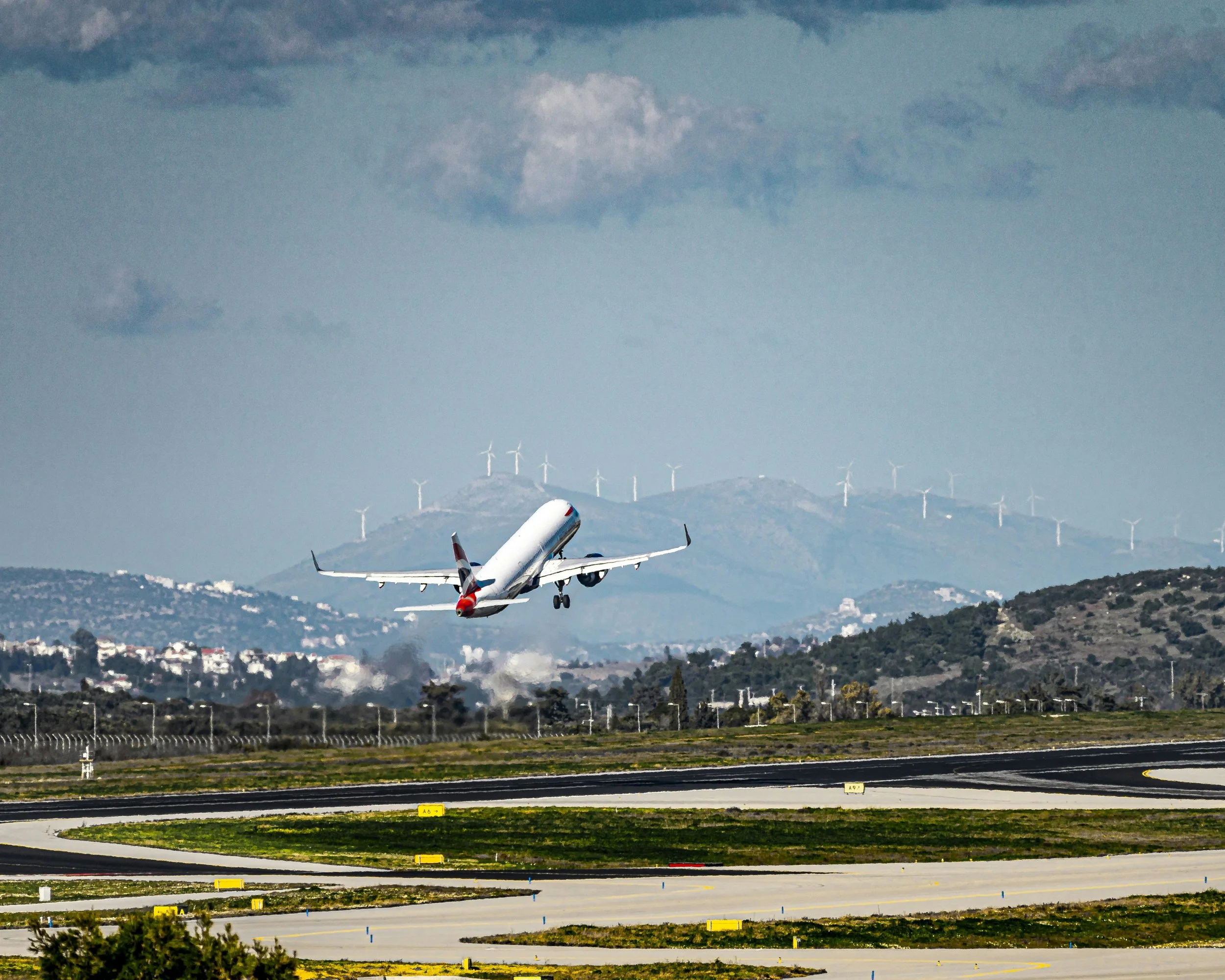
Travel is one of life’s greatest privileges, it connects cultures and creates lifelong memories. However, as global awareness of climate change grows along with a positive shift towards eco-conscious travel, the question arises: Can flying ever truly be sustainable?
World aviation accounts for 2.5% of all carbon emissions and 12% of global passenger and cargo transport emissions, a smaller percentage than many may expect, but significant nonetheless. Given the long haul distances, safety regulations and fuel requirements, the aviation industry faces more unique challenges than other industries. The good news is that given the aviation industry’s commitment to becoming more sustainable, airlines, manufacturers, and governments are investing heavily in technology and innovation to reduce their impact.
The global aviation industry has committed to some ambitious decarbonization targets. The International Air Transport Association has pledged to achieve net-zero carbon emissions by 2050 and has implemented a strategy based on four key areas to do so. The key elements of their strategy are:
Using Sustainable Aviation Fuel sourced from feedstocks that do not degrade the environment or compete with food or water
Investing in new aircraft technology, including aerodynamic and alternative propulsion solutions utilizing electric or hydrogen
Continuing infrastructure and operational efficiency improvements, focusing on air traffic management
Utilizing approved offsets including carbon capture and storage technology
Sustainable Aviation Fuel is one of the most promising short term solutions. SAF is a renewable low-carbon alternative to traditional jet fuel made from waste and plant oils and agricultural residue. The main barriers hindering the more widespread use of SAF is the cost and supply. SAF generally costs between two to five times the cost of traditional jet fuel. Nevertheless, the US Aviation industry set the goal of producing 3 billion gallons of cost-competitive SAF available to US operators by 2030.
Newer aircraft are significantly more fuel efficient than older models. Changes in design are making airplanes more aerodynamic and paired with using lighter weight materials and improved engines, this significantly reduces emissions. As a result, many major airlines are retiring their dated aircraft and investing in a new more efficient fleet.
The aviation industry is also taking aim at the easy wins to build smarter sustainability strategies. Airlines are working on their operational efficiency by optimizing flight paths, reducing taxi times, and using a single engine while taxiing. When multiplied over thousands of flights a day, these improvements make a big difference.
Airlines Taking Sustainability Seriously
Delta Airlines
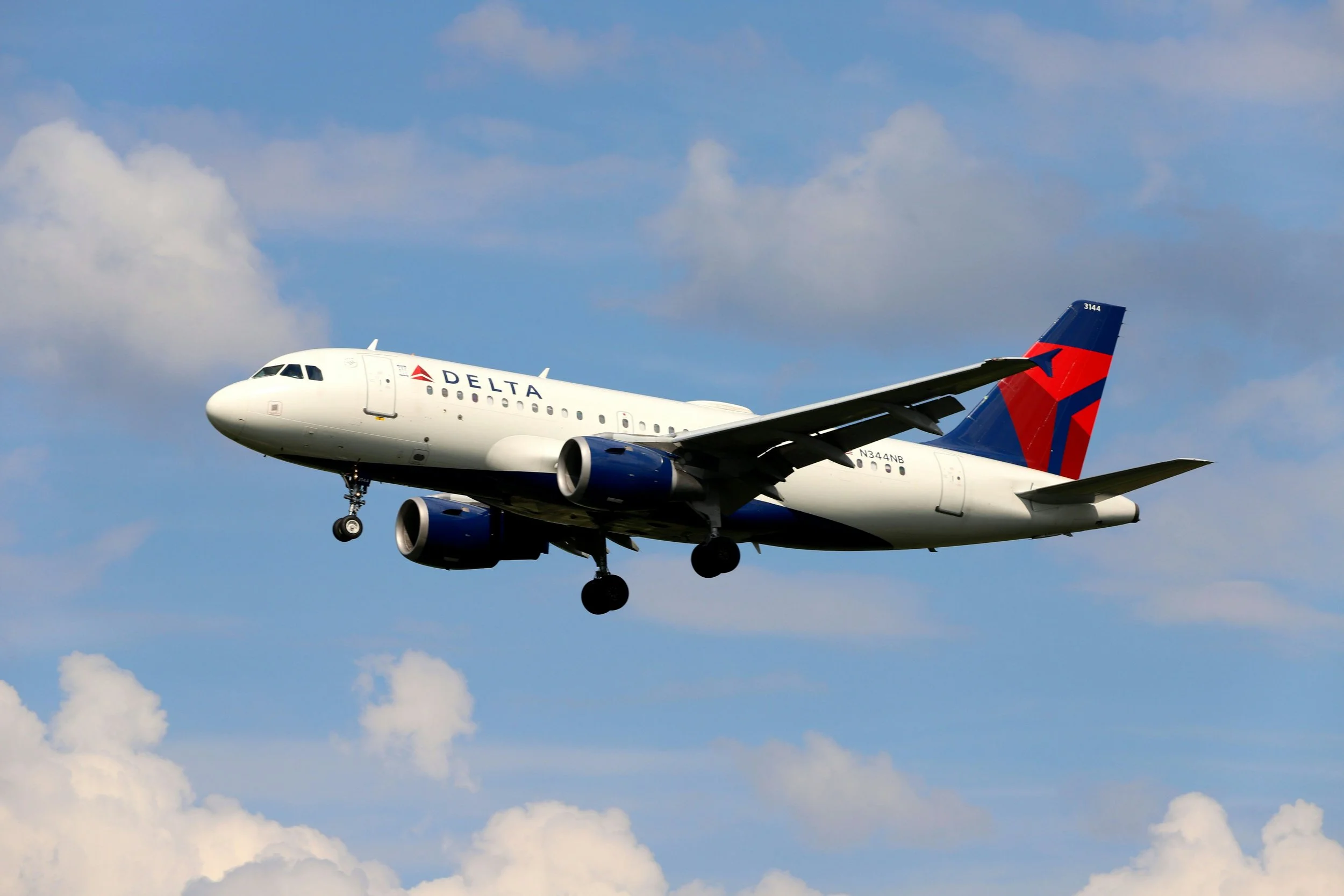
Photo by Forsaken Films on Unsplash
Delta Airlines is committed to net-zero emissions by 2050. As part of their sustainability pledge, Delta is increasing their use of Sustainable Aviation Fuel, agreeing to procure over 400 million gallons annually by 2030. They are also investing in newer, more fuel-efficient aircraft. Furthermore, the company is significantly reducing its use of single-use plastics, eliminating millions of pounds of plastic annually. They are aiming toward a zero onboard waste policy by 2050.
KLM Royal Dutch Airlines
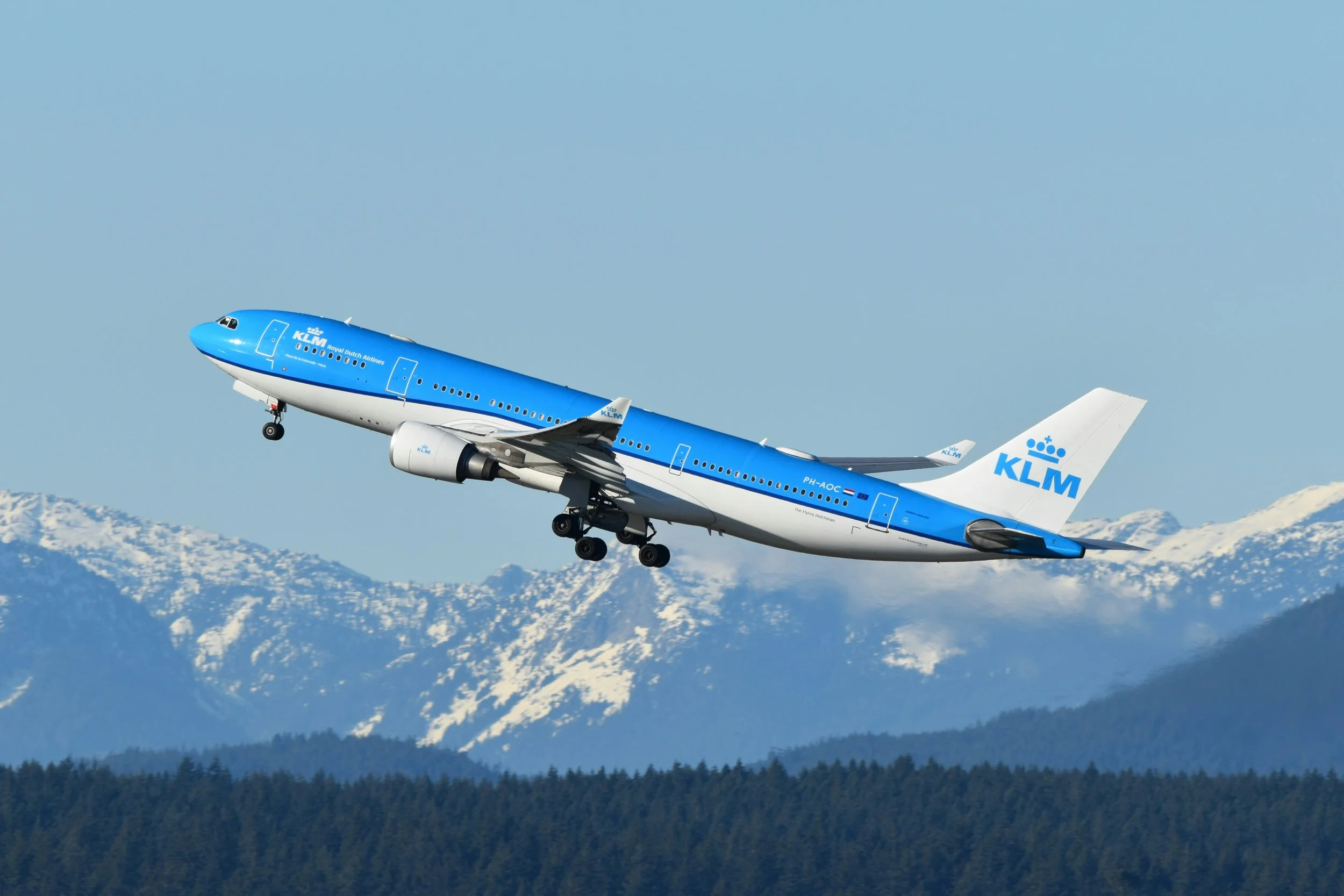
Photo by David Syphers on Unsplash
KLM has set their sustainability targets for 2030, including a 30% reduction in carbon dioxide emissions and using SAF for 10% of their total fuel usage. Additionally, passengers have the option to voluntarily contribute to SAF investments. To lower fuel consumption, KLM has committed to modernizing their fleet with more fuel-efficient aircraft, lighter seats, and lighter trolleys to reduce greenhouse gas emissions. By 2030, the airline aims to halve their waste (compared to 2011 levels) by improving onboard recycling. Furthermore, their sustainability strategy extends to their catering. The airline is sourcing more local ingredients and products that adhere to higher animal welfare and environmental standards.
Lufthansa
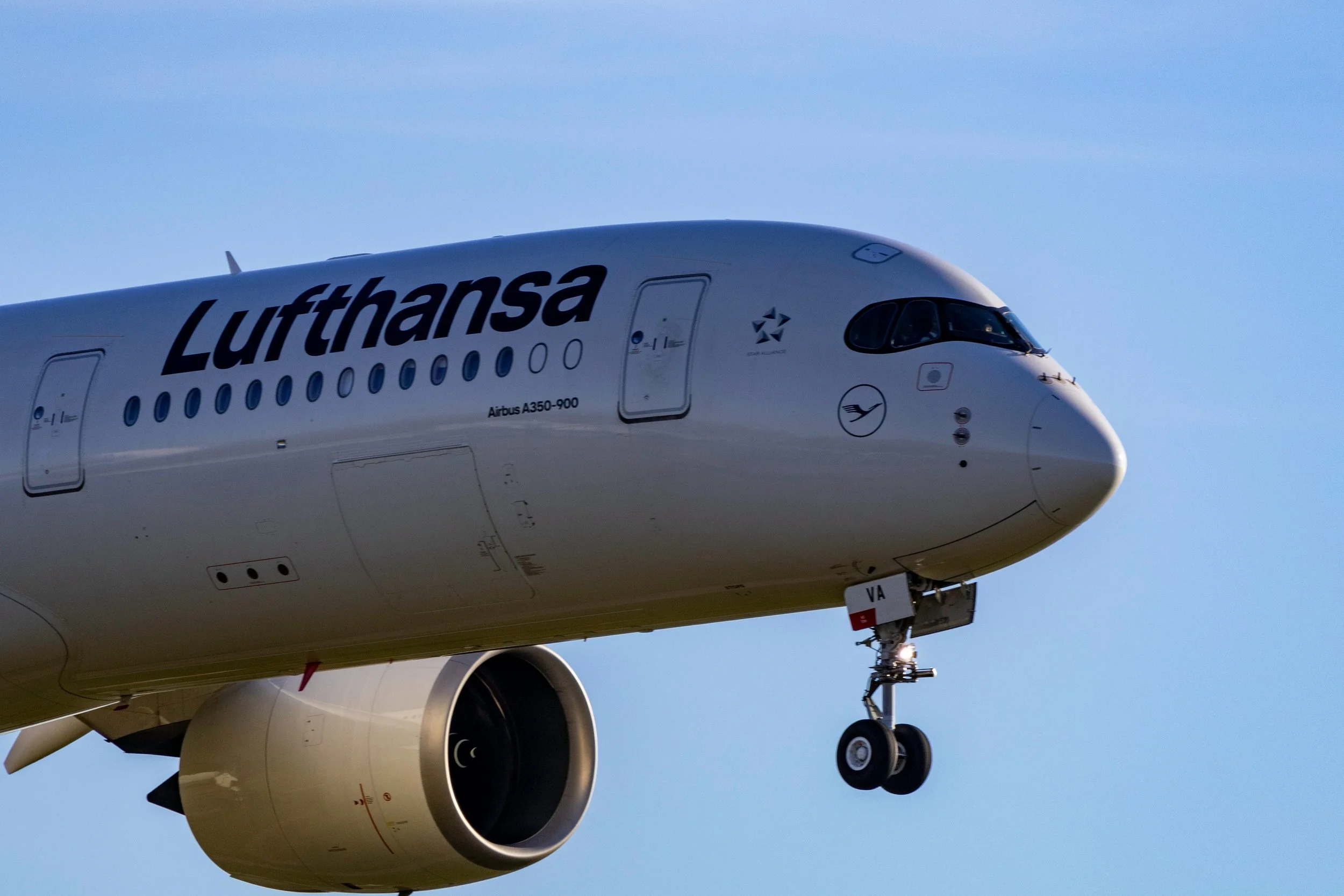
Photo by Chad Montgomery on Unsplash
The Lufthansa Group, which includes Lufthansa, Austrian Airlines, Brussels Airlines, SWISS and Air Dolomiti, offer Green Fares on many of their flights. Green Fares are a special fare option that include carbon offsetting and emission reduction built into the fare price. Passengers who book these flights enjoy benefits like extra points for the airline’s loyalty program and flexible rebooking options.
Alaska Airlines
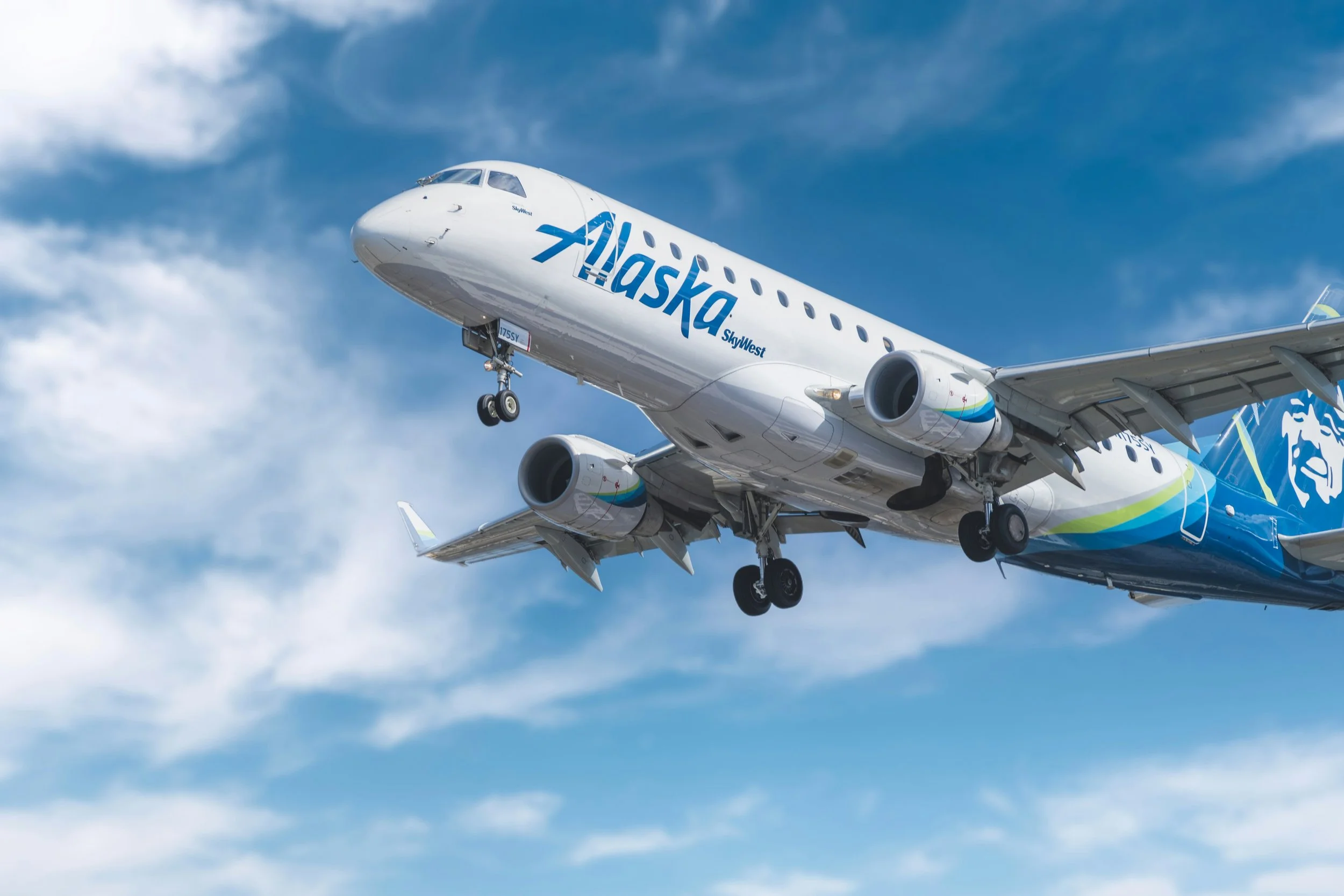
Alaska Airlines offers ways for passengers to voluntarily support sustainability when booking their flights. Passengers can choose to support SAF equal to 5%, 10%, or 20% of their flight’s estimated emissions when purchasing a ticket. The airline also boasts an industry-leading recycling program onboard their aircraft, diverting 63% of waste from the landfill as of 2023.
Whether it be for business, tourism, or cargo, air travel will remain a necessary part of international travel and the global economy. Aviation’s path to net-zero will be gradual and complex, further complicated by safety regulations and fuel requirements. Their commitment to sustainability will require collaboration between airlines, fuel producers, governments, manufacturers, and travelers alike.
Rethinking how we fly is just one part of a bigger picture. Sustainable travel comes down to the choices we make at every stage of a trip: how we get there, where we stay, and how we spend our time once we arrive. That’s why Earth Forward Group has partnered with Savvy Travels Co. to explore eco-tourism and share practical ways to see the world while helping protect it. Follow along with us on Instagram at earthforwardgrp and Savvy_Travels_Co for more tips and inspiration for traveling better.